Tuesday, January 29, 2013

Joys ,Regrets and a Great Vacation


Lucky  welcomed us to our son's home in Las Vegas .
        We just recently returned to snowy, cold Armenia from a 4- week vacation which included a glorious week in warm, sunny Costa Rica with son, Chris, and his amazing wife, Dottie.  We returned to the U. S. with them and enjoyed another week in Las Vegas soaking up the nice weather and the warm hospitality offered by Chris, Dottie and new puppy, Lucky.  Getting to see the movies, “Lincoln”,” Les Miserables”, and “The Hobbit” in 3-D were fun, but the best cultural event was attendance at the Las Vegas Philharmonic Orchestras  concert in the Smith Performing Arts Center, a gorgeous new facility recently opened to rave comments in the city.   We’d highly recommend any visitors to Las Vegas to check out the cultural offerings at the Smith Center because they vary widely and appeal to many tastes.   Next on our agenda was a rondevous with Dave’s sister and her husband in Flagstaff, AZ, a lovely mountain town where we’d been before. Though near the Grand Canyon, we chose to be lazy instead of tackling the crowds on a short weekend and just enjoyed being together again.   The 2 Dave’s did take one good hike while E. O. (Ellen) and I visited an intriguing historic house and afterwards enjoyed some shopping.   Then back to Las Vegas for a few days before flying to Nashville to rondevous with daughter, Flora, and proceeding together to visit my 96 year- old father and 3 sisters who live in the area of his home in Clarksville, TN. 
      
David, daughter Flora and my 96 year old father
            Joys and regrets become evident with family visits after over a year. Joy occurs when everyone is healthy and doing what their lives call for at the present.   Even my father, at 96, continues to live alone, care for his basic needs and keep up with current events as he has done for years.  True, as he always says, “I may not be here when you get back again”, but one must not dwell on that subject for too long. Life is known to offer expected and unexpected turns in our journeys down its path.


It was fun to see my niece’s little girls growing up into beautiful, inquisitive, involved young women with so much potential ahead of them.  Unlike the girls and women of Armenia, Gracie and Livvy have a wide-open field of opportunities to pursue as they mature, and based upon observation, they will go at life whole-heartedly and with confidence. Dave’s sister continues with her life as she approaches her 40th anniversary as a nurse in various roles at Aspen (CO) General Hospital.  Although not planning retirement right away, she is already an icon for the nursing profession as she is the last nurse in her institution to wear her nursing school cap and a white uniform complete with white hose and shoes------no scrubs for E. O.!    As a retired nurse myself, I know how hard she works and how much of herself she gives to her work and her patients. A final joy came as Dave and I visited with an elderly aunt.   Aunt Mary Nola has been our most faithful snail-mail correspondent during Peace Corps service.  She is curious and interested in where we are, what we are doing and seeing, and what we’ll do next.  She relishes and saves all of my letters, postcards, and momentos and showed me the old Compton’s Encyclopedia from which she gained information about Armenia.  I promptly promised to send her more updated reading material which would reflect Armenia as a free and independent Republic, not the country of which she read which was ruled by the Soviet Union. Though affected with arthritis and the care of an ill husband, she laughs and jokes readily and has wonderful stories to tell about her children, grandchildren and great grandchildren of which there are many. She is a joy to know.
 Beautiful snow fall soon after our return to Dilijan
       Regrets occur, too, after such a trip…regrets at not being there to see the new baby born into my nephew’s family, sadness at not being able to attend my sister’s funeral which occurred the week we moved to our site in Dilijan, regrets for not being more helpful to my sisters in the attention they give my father although they seem to be doing fine with the added responsibility of frequent checking on him, grocery shopping and doctor’s appointments on days when they must work. And there are regrets for not having more time with our daughter, for not being able to visit our grandson, for not contacting several people who’ve been such faithful supporters during Dave and my Peace Corps service, and regrets for not being able to tell more people about Peace Corps and its work.  (A humorous regret is that of not buying more peanut butter while in the US.  We thought we had a stable source here in Armenia but voila! we could  not find ANY when we returned to that store and others!)
                                                          

Small market owner who knows us and greets us every day. She is an example of the joyous people we have met in our town
A few neighborhood children who were glad to see us return to Dilijan
             
 Joys and regrets are a part of life and they balance each other so that we stay focused on what is most important.  Too much emphasis on regret smothers the positives which inspire joy. Dave and I have a mere 7 months left of our Peace Corps service, a short time considering how long we had wanted to do this and how long the process became to actually become invited Peace Corps trainees.  There is really not time to dwell upon regrets.  Joy greeted us at our doorstep when we returned this week.  2 young neighborhood boys were immediately at our gate asking to help us with our bags and luggage. They were glad to see us and wanted to know about America.  These 2 children as well as countless other neighbors, friends, students and colleagues provide the joy of association with persons from another culture and another country.  We plan to leave Armenia with joy-filled hearts which come from knowing them. We will strive to complete our time in Armenia in such a way that there will not be too many regrets for things we did not or could not do.  Let’s hope we can accomplish that goal.      Judy and Dave

Wednesday, December 26, 2012

The Day the World was Supposed to End


Today is December 26 , 2012, but this blog was written on Friday, December 21, the day the world was supposed to end.  Here’s the story as written on that day………….
    It is Friday, December 21, 2012 at 10 am and Dave and I are in the Moscow, Russia, airport awaiting our next flight headed towards vacation in Costa Rica. The world is supposed to be ending right now! But it is not ending, at least not here.  Travelers continue to rush to their gates, grab quick meals at expensive airport cafes, and tend to crying children who’d rather be at home than hanging out in an airport. 
Little girl with her dog, waiting for the world to end.....or ...maybe her next flight out of the Moscow airport


 Contrary to predictions that planets would align and trigger a
 series of earthquakes and floods which would wipe out the world’s population,
 we are still here. And we met a delightful Armenian diasporan young woman who drank a cup of coffee with us as we waited our fate.


Lori, young Armenian woman we met in the Moscow airport as we waited for the world to end or for our next flight.    The world did not end.  Our flight left on time and so did  Lori's.


According to the Moscow News, Reuters reports that 10% of the world’s people believed the apocalypse would occur and the world would end with the Mayan calendar in 2012.  Back in Armenia, many of my students expressed concern about these “the end is nigh” predictions. A few students said they would skip classes on this foreboding day so they could be with their family in their last moments.
   
       As Dave and I ignore what we believe to be just another doomsday prediction, we embark on our long awaited vacation to Costa Rica to be followed by visits to family in the U. S. As many others both today and previously, we do not support such predictions of the world’s demise and find it merely interesting material to read about as we wait in the airport. The Moscow News article states that the world is unlikely to end yet paranoia persists.  Of course, entrepeneurs and hucksters alike see $$$$$$ ( or drams or rubles) in their future. An apocalypse kit is apparently available and contains a rope, vodka and other supplies one might need in their last hours.
     
          It is now 3:15 pm and we are about to land in London to await our long flight to  our destination in San Jose, Costa Rica. We escaped the apocalypse and feel ready to enjoy a few weeks of family time before returning to Peace Corps service in Armenia. Not being one to say “I told you so”, I still know it was the right thing to do…….to ignore the warnings, proceed with business as usual and leave the apocalypse worries to others.      

Dave, Chris, and Dottie take a stroll on the beach  in Costa Rica
                                   

 Where were you on December 21, 2012, the day the world was to end??? 

Monday, December 24, 2012

48 in Armenia......46 in Niger......50 in...........

46 in Niger, 48 in Armenia, but where will 50 be?? Those numbers refer to Dave and my wedding anniversaries. We celebrated #46 by sharing a huge cake with fellow volunteers and staff in Niger, Africa in December, 2010, where we were still in pre-service training with the U. S. Peace Corps. It was an occasion to remember. 
Dave,Judy,Hayarpi and Levon celebrating  the Smith's 48th wedding anniversary in Armenia

Then both # 47 and # 48 have been celebrated in Armenia as we continue our Peace Corps service. For #48 we found ourselves celebrating  with Armenian friends in Yerevan, the country's capital. The city's official Christmas tree lighting provided a colorful, festive backdrop to our evening with Hayarpi and Levon, a young couple who have quickly become part of our lives in this country.  Were the fireworks and music in Republic Square performed especially for our 48th anniversary? Of course not, but the thought was appealing as we watched the explosion of lights and music coming from the stage and watched the count-down which preceded the sudden illumination of the huge tree.  Instantly changing from dark green to brilliant red signified the official start to the season leading up to Nor Tari in Armenia, and we were right there to see it.
Christmas tree in Republic Square 


Fireworks in Yerevan


Later, as we recalled previous anniversary celebrations, we began contemplating  how and where we might celebrate our proverbial "golden anniversary".  To be perfectly honest, I find it a bit disconcerting to think Dave and I are even OLD enough to be wed almost 50 years. Why, I remember when my parents had been married for 50 years and all of the flurry associated with their Golden Anniversary party. Where has the time gone? Will we want to have such an event or will we decide to take a trip around the world, or return to visit Armenia, or celebrate that 50 year span of time in some philanthropic way?  Do we really feel 50 years older that on that cold, snowy day we married in 1964?

These questions are merely questions for us to consider and no answers are available yet. #50 for us will come sooner than we think and by then , our plans will have changed more than a few times, based on life-----or as the saying goes, "life is what happens when you're making other plans".

For now, the only sure thing is that we hope to celebrate the event together, wherever that may be. #48 was fine. #49 is approaching. #50 is a goal to be reached and celebrated.  We hope you will join us when the time comes.    Thanks for being our readers in this journey.     Judy  

Thursday, December 20, 2012

Peace Corps Armenia: Month 18: November, 2012


November was such a good month in lots of ways. Oh, there are the usual gripes about schedule changes, cold building, students absent when they should be at school, etc., but overall, looking back over the month, it was a good one.  Here are some highlights, beginning with the fact that my grant proposal for new English books for our college’s English students was funded.  No, it was not millions of dollars, not even thousands, not even $1000, but for a college without books to study English, it was BIG.    My counterpart/team teacher and I will purchase the books in January when David and I return to Armenia from our Christmas trip……just in time for our second semester.


New classroom for English classes


In addition, my college director recently designated a different classroom as the English classroom ---one on the warm side of the building ---a significant factor when the building is often colder inside than out!  We have new desks and chairs, a blackboard, nice book cases and new linoleum and paint to clean up the old space.  We are told we’ll be able to share the use of a projector/screen and maybe a computer from the adjacent computer room.  This is so much better than when I came. The students have helped us teachers to hang our English posters and other things so that the room looks more like a classroom in the U. S. than in Armenia. Students come to this classroom now for classes instead of the English teachers going to the student’s homeroom.  So much better--------now we do not   have to drag all of our stuff from room to room and if we want to suddenly talk about a subject, our teaching materials will be right there handy.


Armenian English teachers at our workshop
                                                   

Also in November a group of 4 other Peace Corps volunteers and I held an English teacher’s workshop at the British Council office in Yerevan.  In attendance were teachers from in and around Yerevan. Our focus was on reading and creative writing in one session. The second was on making inexpensive games and visual aids to enhance learning .   This is an idea not used much in Armenian schools so learning to use Bingo, Jeopardy, the Memory game, and the Hokey Pokey were new to many teachers.  We hope to do a follow-up workshop or 2 in 2013 since the response was good to this first one.


Staff at Bridge of Hope in Dilijan, Armenia during Thanksgiving Day lesson by Kellianne Lauer and me
    My site mate, Kellianne, and I have been holding  an English Club/class at an organization which provides service to children with various disabilities. Therapies of all kinds are offered plus there are children in the neighborhood who just come to use the computer, play, do homework or other activities. There is very little in my town for children to do after school or on weekends.  Bridge of Hope is a safe, warm place which meets many children’s needs.   Kellianne and I work with any staff members who wish to improve their English and we’ve had up to 14 participants in our meetings twice a week.  They are mostly young women (and one man),  who know a small amount of English and want to learn more---very interesting and enthusiastic and a pleasure to work with.


Students staying close to the wood stove in their classroom  when gas not available
A negative in November occurred when the local gas company did their inspection and found my college’s gas heaters not properly vented.  (Interesting, since they were that way all last year!)  Our director closed school for several days while repairs were being done.  When we returned to find the work not complete, a few rooms were being heated with wood stoves.  Wood stoves are used a lot in Armenia despite the fact that it is illegal to cut down trees for firewood.  Go figure, somehow, people obtain ample wood but it is quite expensive, as is gas.  At the college, I’ve witnessed students burning the wood slats from old furniture but this is not an acceptable practice.  Eventually one small gas heater per classroom was repaired and school was open again.  The building is still frigid in the halls and everyone must wear a coat to stay reasonably comfortable. I hardly recall now how cold it was last year when we had snow from October 1 until into May. 
 I hope you will continue to follow life here in Armenia. Unbelievably, it will endfor us  in about 8 months! Who knows what lies ahead after our COS (closure of service)? Guess we’ll see……………………… Comments are welcomed!        Judy

Wednesday, November 21, 2012

Thanksgiving Thoughts from Dave and Judy


“Thanksgiving in Hollywood” is a contemporary song found on the internet by my Armenian students. I do not want my students to think this song’s lyrics are a true reflection of what our American celebration of Thanksgiving is all about, even though the music is appealing and lends itself well to a program aimed at college aged students.  Just the mention of “Hollywood” encourages the students to think of the stereotyped, media’s portrayal of America---the land of rich people and vast opportunities.

We are planning a program about Thanksgiving in America and will include harvest time in Armenia since the times coincide and inspire similar feelings of being thankful for what one has. I am trying to help my students to understand the history of our Thanksgiving Day and how it is celebrated now. The program will be presented primarily in English, but readings must be translated so that the majority of the audience will understand the message.  Of course, the universal communicator, music, will be of utmost importance. Unfortunately, songs which I love and recall -----“Over the River and Through the Woods”, “Come Ye Thankful People Come” and “Harvest Home” are not nearly as exciting as “Thanksgiving in Hollywood”.

Dave and Judy with Peace Corps Niger Training Director, Tondi,  2 years ago
 Armenia is a Peace Corps assignment wrought with challenges as well as blessings. What are David and I grateful for as we continue our 2nd year of service in Armenia? The first is the blessing of good health, unlike Thanksgiving 2010 which we spent in Niger, Africa during our first Peace Corps assignment. On that first Thanksgiving, David was being released from the hospital on Thanksgiving Day.                                                                  

Music and Art:  Armenia cherishes music and art and encourages its young people to study both.  David and I have come to anticipate attending occasional concerts of the Armenian Philharmonic Orchestra in Yerevan and the Dilijan Music School in our town.  Dilijan Art School is a fine example of available training for young talented students as they join the ranks of other famous Armenian artists. Music soothes the soul and art brings a different perspective to life in Armenia where strife and stress abound.
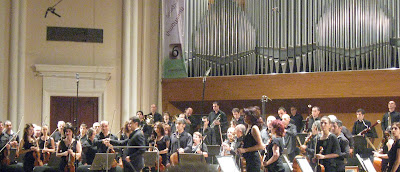
Armenia Philharmonic Orchestra  performing in Yerevan, Armenia
                                                    
Director of Dilijan Art School with students submitting art work to the  K-12 ONE WORLD Classroom International Art Exchange
                                                           

Mountains:  Visible from our apartment are lofty mountains which surround our town. Their majestic peaks will soon be snow-covered, but we are thankful for their mighty presence as we watch the seasons change throughout the year.
View of mountains from our apartment
                                                            

Flowers:  Prolific profusions of flowers from early spring until the snows of winter make Dilijan, Armenia a haven for flower lovers.  I am thankful for that blessing of beauty which brightens our days yet is taken for granted by many Armenians.

A beautiful example of  wildflowers found in Armenia
                                                                    
                                                            
Armenian family we met and shared a meal with several times: very hospitable people
                  Hospitality of the Armenian people:   Warm welcomes, a kiss on the cheek,  an invitation to have coffee , small gifts brought to every encounter even by those with little money…… we cannot be grateful  enough for those expressions of acceptance by people with whom we become acquainted.                                           

Armenian language tutor with Judy
              Tutors:  Without our tutor we’d be lost.  Our tutor not only teaches a foreign language to older learners such as David and me, but is also a link to the community in which we live, to the people we want to meet, to her family, to events we enjoy and to life in Dilijan.  For Knarick’s presence we are grateful.

One little boy in our neighborhood-------being shy, but so cute
             Children:  loving, laughing, curious, shy, ever present…..they are Armenia’s future and must be encouraged in the pursuit of more than basic education and life without hope. We are thankful to meet so many and to see them grow.

Narvik, special little child in our neighborhood who loves to study English with us.


Gas Heater in our apartment: we are fortunate to be able to stay warm on the cold days of winter  in Armenia

Heat: we have gas heat, expensive and warming.  We are grateful to able to afford it in our old age!! Many volunteers rely on wood stoves and must balance staying warm with the scarcity of wood as the winter progresses. Most Armenians we know also struggle with staying warm in a cold country.                                                    


      Peace Corps:  without this organization we’d not be in Armenia. We are thankful for the opportunity to be in the Peace Corps and hope our time in Armenia means something to others.

     Happy Thanksgiving to all.  May your day be blessed with loved ones wherever you may be on the 4th Thursday of November, 2012.    Judy and Dave


Tuesday, November 20, 2012

Smells, Odors, Aromas, Fragrances.......of Armenia


The smell of the bathroom is overwhelming as I walk down the hall. It is several meters ahead and at least it is inside the building, not outside in the ever-changing weather of an Armenian autumn.  Open holes atop a concrete platform, no water to flush, and bring your own paper---- it does have  ½  wall partitions between the “pits” but no doors----that is the bathroom at my college.  There may be cold water, although it freezes during the frigid winter months, but no soap or paper towels for hand washing.  I have trained myself NOT to use these ancient disgusting facilities except in a dire emergency, but plenty of other staff and the students at my college enter and exit these places every day. They are accustomed to it or do not care about the lack of esthetics which bothers me.  It is pathetic for children to encounter such degrading conditions and not even realize there is a better way.
                                            
_______________________________________________________________________________


As I walk home today the warmth of the sun caresses my face. I carry the jacket worn this morning to ward off the chilly, dampness of late October. As I approach our neighborhood a familiar scent wafts across my path and immediately excites my memory. A feeling of homesickness overcomes me. Smoke is in the air and the smell of burning leaves so reminiscent of autumns in the past evokes a strong emotional reaction. I am reminded of campfires, of camping out, of cooking marshmallows to a crisp over an open fire. I can smell the season’s first fire in our former home’s fireplace. Momentarily I forget the blessings of such a warm, sunny autumn day when last year we had snow in October. I continue to walk, deep in thought and reflection, and think of the past, thousands of miles away from Armenia. The scent of burning leaves follows me and I relish the moment. I take a breath and breathe in the essence of autumn.
Students enjoying autumn leaves


______________________________________________________


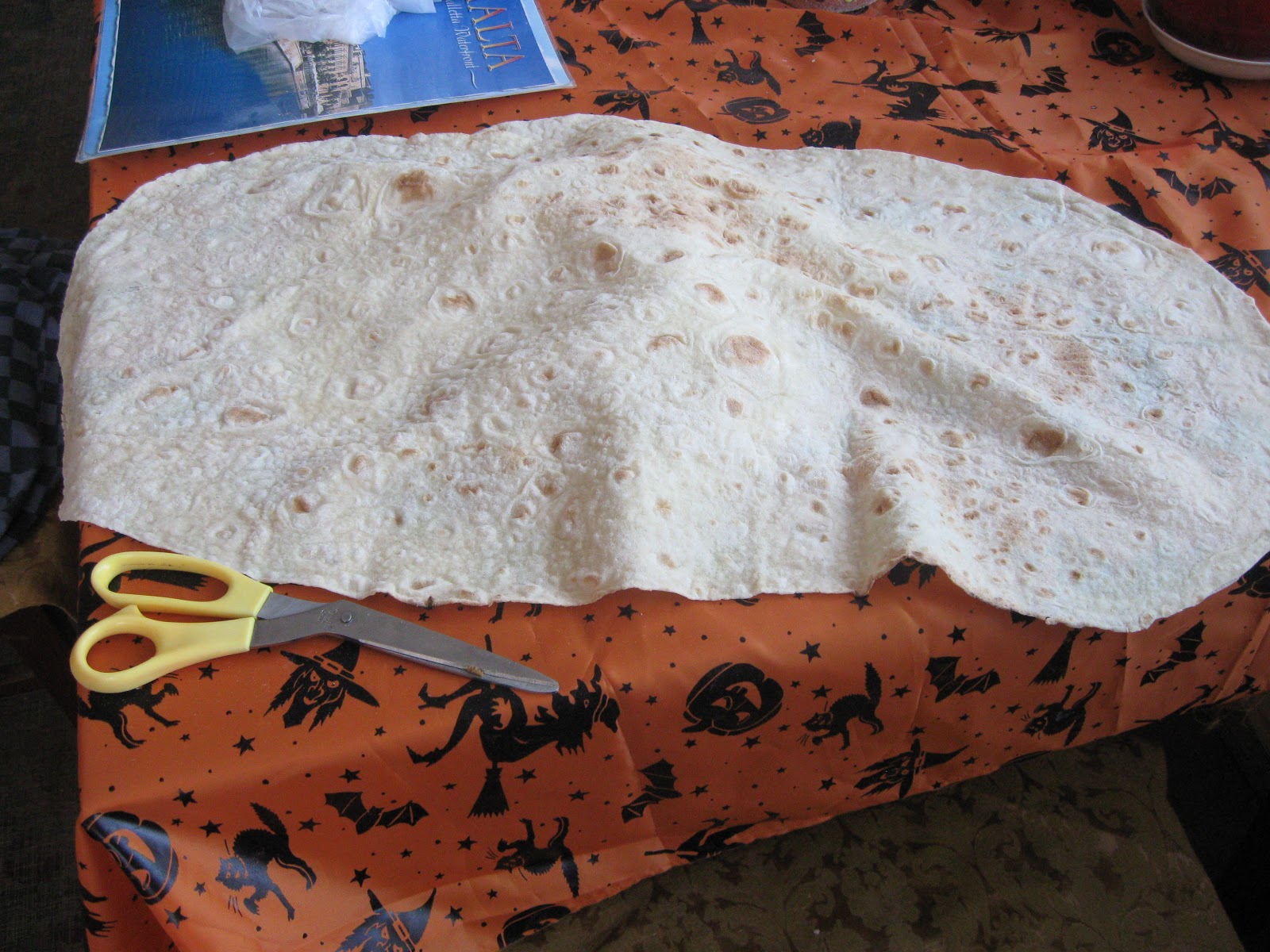
The smell of freshly baked bread greets us as we walk in our neighborhood on certain days. Near our apartment is a family-run bakery which specializes in the baking of lavash, the National Bread of Armenia.  From early morning to nightfall, 4-5 women work in this small place located on the street level of the owner’s home. They can be seen mixing ingredients, rolling out the dough, slinging it into shape like a pizza crust creator, then putting each piece into the special stone oven to bake to Armenian perfection. Lavash is a thin Armenian bread which is served with every home-cooked meal and in every food establishment in the country. Its closest kin may be the bread used in wraps so popular in America or even the delicate crepes served in France.  When purchased from the bakery, the customer gets 3 large sheets of lavash for 240 Armenian drams, about   60 cents in USD.  Though thin, it is sturdy bread and one served in a variety of ways without which an Armenian meal would be incomplete. It is cut with scissors and placed in stacks beside each diner’s plate.   In the absence of lavash’s daily aroma drifting through the streets, our neighborhood would also be incomplete and our morning walk would not be nearly as pleasant.  We will miss lavash when our time in Armenia ends.
Neighbor who makes lavash
                                                                        
Sheet of lavash as bought in Armenia


______________________________________________________
          Cow dung, chicken droppings, pig pens ---all of these exist in our neighborhood, and we live in a tourist town of Armenia.  The smells create a barnyard-like odor usually found in rural areas in the U. S.  Since there is no zoning or restriction against having small numbers of livestock in town, we encounter random cows grazing along the streets and in the center of town. One is just as likely to see chickens and occasionally pigs and horses stopping traffic. Local drivers are accustomed to the presence of animals in the street, and we’ve not seen any fatal accidents because of this dual use of the roadways.  The animals are non-aggressive creatures whose main goal each day is to eat till full. This goal will be increasingly more difficult to achieve as winter arrives. The animals will then be confined to their owner’s small sheds and barns on the coldest of days. Now though, they roam the streets untethered and unattended.  Traveling alone or in small groups, the cows, chickens, occasional pigs and a horse now and then, seem to know where to graze, which garbage cans are full on a particular day and where they must return to when it gets dark.   To some people the animal odors are distasteful smells one must endure. To us the smells are comforting and indicate that other living things are sharing our space in Armenia. I like that!


This is one of the regular cows who wanders our neighborhood producing the smells  described above. She is definitely also willing to be photographed!
                                      

After I wrote this post, it dawned on me………here in Armenia one of the distinguishing facial traits seen in most Armenians is the person’s prominent nose.  In fact, when my English students are asked to describe their peers in an exercise focused on adjectives, they always include their thoughts about the other student’s nose. Of course, this prompts some uneasy laughter and good –natured teasing among the students.  Maybe the Armenian focus on noses prompted my focus on smells. Who knows (nose)?       Judy

Sunday, October 21, 2012

BENJY and THE NUMBER 3

    Benjy was hit by a car recently and died.  His small, sturdy, blood encrusted body was lying near the curb where he’d either been thrown or placed after the incident that took his life.   Dave came home with that sad news and although we were not surprised at what happened to him, we were saddened by Benjy’s death. I could not imagine seeing him as Dave did, as street cleaners scooped him up off the ground---- workmen just doing their job and getting rid of a dead dog. So, you might ask, who was Benjy?   Early in our time in Dilijan, we began to see a scruffy, shaggy, tail-wagging dog who slept on the street near the curb in front of what we hoped was his home. First, I saw him as I walked to my college, then when our routes changed and David walked by the house, he would see the dog.  Dave named him Benjy due to his resemblance to the movie star dog bearing the same name. Dave started giving him a treat every day, sometimes left- overs and occasionally real dog biscuits when we could find them. The dog gradually became Dave’s friend and would jump up to see him as he approached, as if he recognized Dave’s red coat and kind voice. He learned to like me, too, and one day as I was sitting at the bus stop not far from Benjy’s spot on the sidewalk, he came over and let me pat him on the head.  Benjy was the dog we could not have in Armenia and a reminder of ones we had owned and loved in the U. S.
   In Armenia , dogs are  usually either tied up to short chains  or left to run loose in the streets, often to be hit by passing cars or taunted by obnoxious children.   The tied- up dogs spend their days and nights barking at passers-by, eating whatever is thrown to them by their owners, and often sleeping out in the open even in the frigid winters of Armenia. The freer dogs risk their lives for their freedom, are sometimes skittish around strangers, and occasionally act aggressively.  They fend for themselves by eating from the strewn garbage which litters our town or by literally jumping into the dumpsters as if it was their cafeteria----what will be served today?   Very few people in our town seem to have real pets but Benjy gave us the impression that he was cared for. He was usually in front of the same house every day, up until the past few months when we began to see him all over the neighborhood. Benjy’s untimely death occurred and made an impression on both of us. We miss seeing him and wish he had experienced a better dog’s life.

Benjy eating treat given by Dave as he goes to work in Dilijan

          The death of this dog, who we really did not know, saddened us. Then a few days later a neighbor who we had never met, died of an alleged heart condition.  We saw the cars at her home as friends and others paid their respects. We wondered about who she was, what she was like and what kind of life she had led here in Armenia.  We’d never know those facts.  Then yesterday at my school it was announced that our director’s sister-in-law who lives in Russia, had died of lung cancer.  Although I do not know this person, I do know, respect and care about my college director.  I felt sad for her and all that was ahead as she dealt with a loss in her family.
       The common thread which runs through each of these stories is that I knew about all 3 living beings who died. Their deaths came 1-2-3, one after another within just a few days of each other. Even though they were only marginal and distant beings in my life the knowledge of their passing prompted thought. Do events of a certain kind come in 3’s, as the old superstition claims?  Or is it mere synchronicity that I heard of deaths in this sequence? I wondered about the old superstition and found that there is a Biblical connection to the number 3, but is there more to learn about this old belief?  Wikipedia (who doesn’t believe Wikipedia??) says that the superstition about events occurring in 3’s comes from the “three on a match” among soldiers during WWI. According to Wikipedia, if 3 soldiers lit their cigarette from the same match, 1 of the 3 would be killed. The first soldier would light the match, then his cigarette, and the enemy would see the light. When the second soldier lit his cigarette, the enemy took aim. Finally, when the 3rd soldier lit his cigarette the enemy would fire and kill one of the men.  In reality, though, there was NO such superstition in WWI, but it was invented by Swedish Match tycoon Ivar Krueger in an attempt to get people to use more matches! Wikipedia also confirms this latter story.
Whether the rule of 3’s means anything or not is insignificant. What is important is that these 3 living beings I’ve described are no longer with us and there are people who loved and now miss them, even Benjy.  Their lives were meaningful for that reason alone. May this piece be a tribute to each of them
3 final words……………….REST IN PEACE.                                 Judy